
Folding cartons
Glued at the side seam, then delivered flat in shrink-wrapped bundles. Erecting one takes seconds on your packing line, and auto-lock styles need no tape.
Support
Boxes only earn money when they arrive clean. Here is how we pack, which trade terms we cover, and what lands on your customs form.
Paper packaging almost never ships assembled. It travels folded flat, which is a large part of why factory-direct costs less than ready-made: you are not paying to ship air.
Glued at the side seam, then delivered flat in shrink-wrapped bundles. Erecting one takes seconds on your packing line, and auto-lock styles need no tape.
Folded flat in bundles, tab-locked or taped into shape when you pack. The outer shipper travels the same way and adds almost no volume.
Greyboard cannot fold, so rigid boxes arrive assembled and nested — lids stacked inside bases, each set bagged. Collapsible magnetic boxes are the exception: they fold flat and cut shipping volume noticeably.
What happens between the last inspection and the container door.
Double-wall corrugated, weight-balanced and load-limited so the bottom row does not crush. Carton dimensions, pieces per carton and gross weight come with the packing list for your warehouse planning.
Cartons stacked to a stable height, strapped, corner-protected and stretch-wrapped to survive the port chain. Pallet height follows your container plan or warehouse limit, not a fixed default.
Poly bundling and desiccant for sea voyages, so printed paper arrives the way it left the factory rather than wavy at the edges.
You see photographs of the packed cartons before the goods leave — the actual pallet, not a stock image.
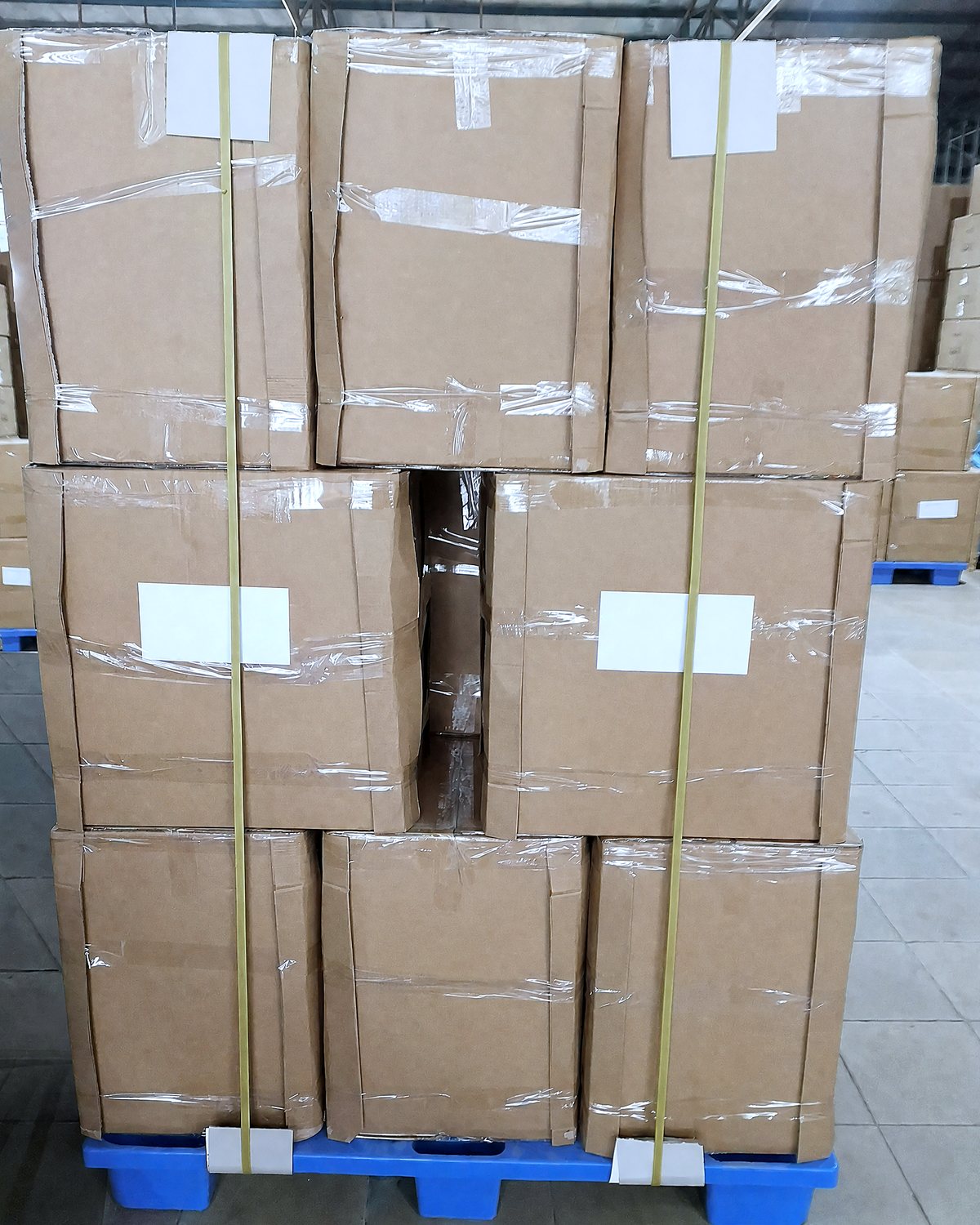 Cartons counted and labelled against the packing list
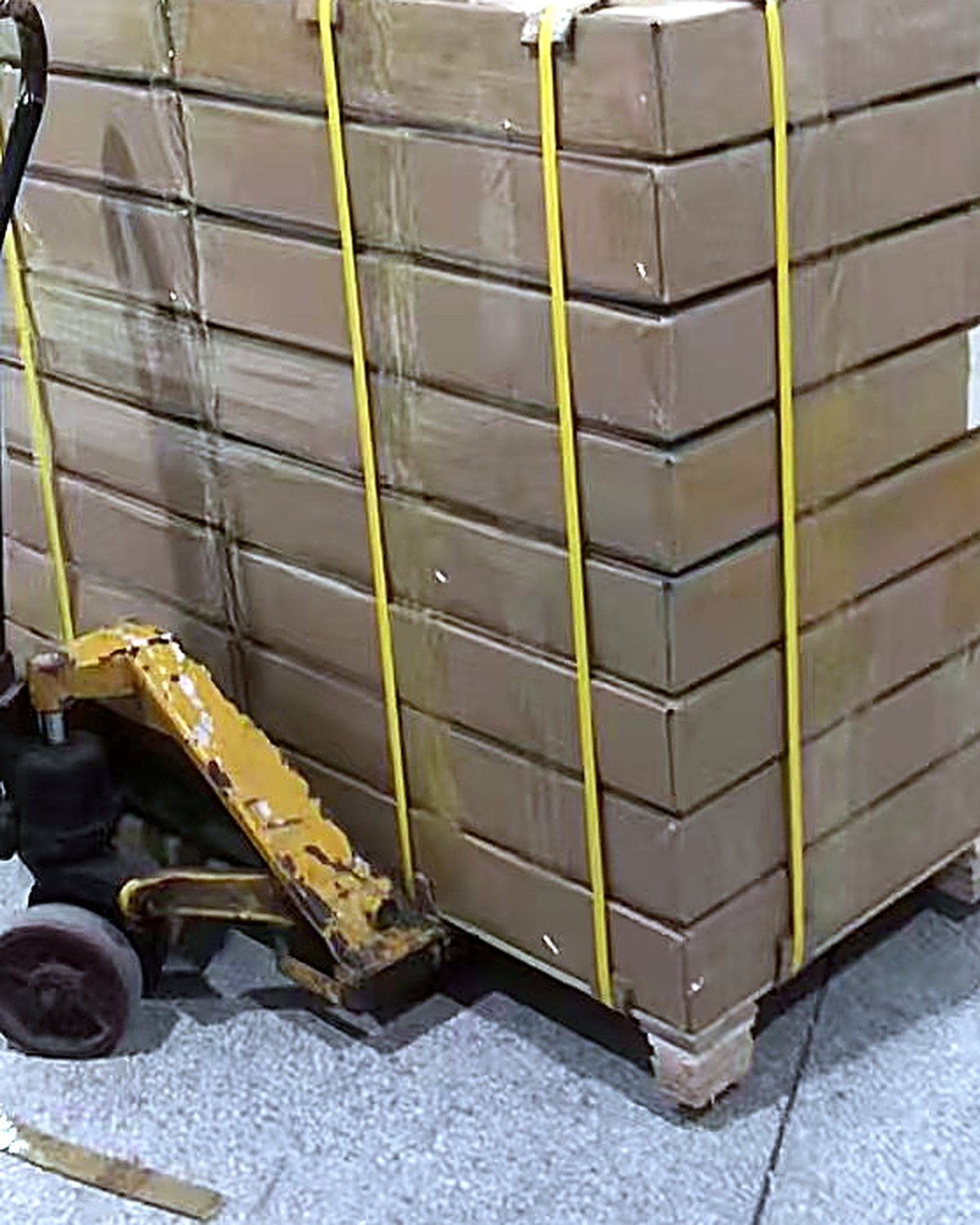 Strapped and stretch-wrapped at the loading door
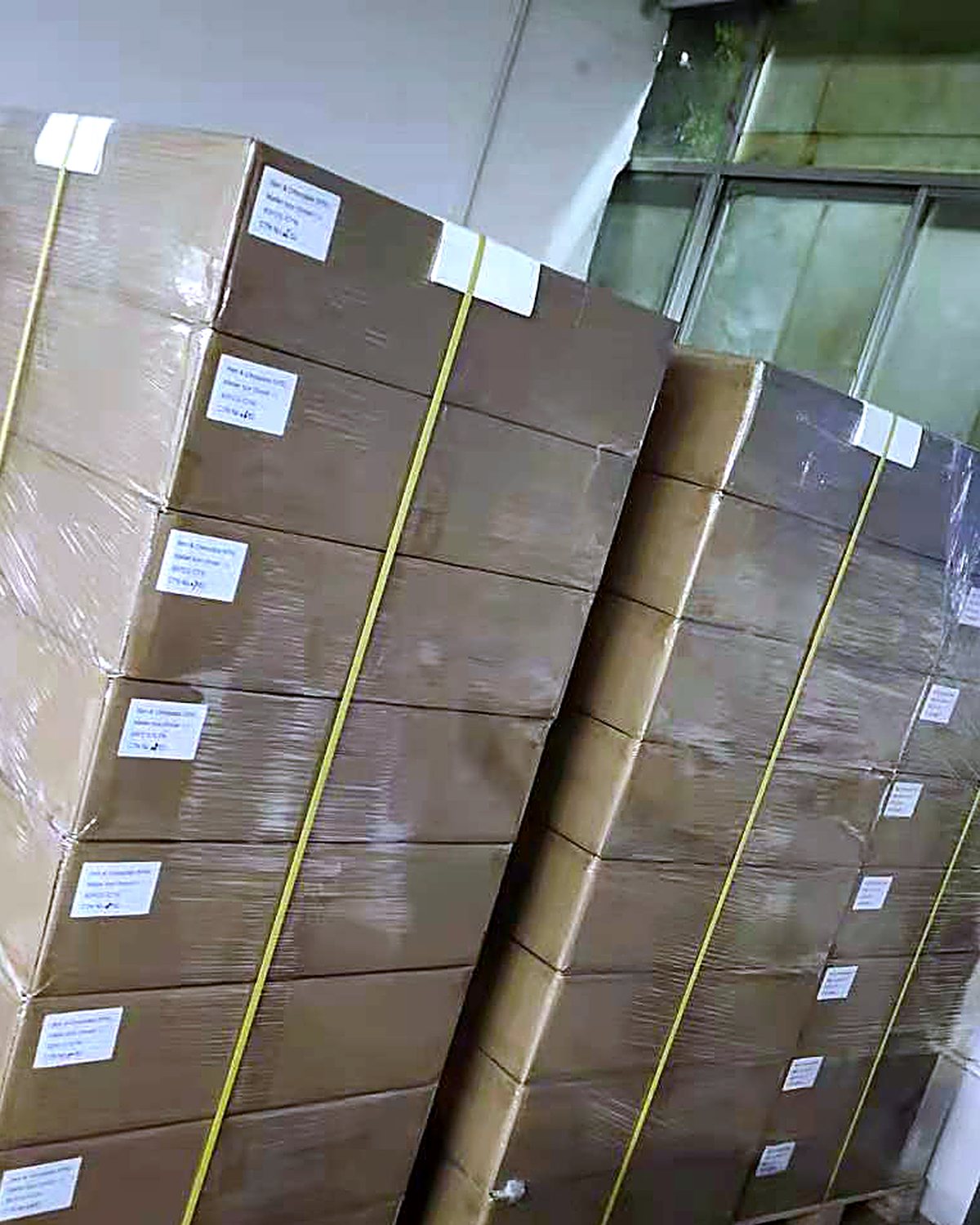 Two pallets staged for collection
The term is stated in the quotation rather than assumed. Ask for two or three side by side and compare the delivered cost, not the ex-works price.
FOB Guangzhou / Shenzhen
We deliver cleared goods onto your vessel at the port; you arrange and pay the main freight. This is the default term in our quotations.
EXW
Goods are ready for collection at the factory; you arrange pickup, export clearance and freight. Used when your own forwarder handles everything.
CFR / CIF
We pay freight to your destination port and you handle import clearance and duty. CIF includes cargo insurance; CFR does not, so arrange insurance before booking.
DDP
Delivered duty paid to your door, with import clearance and duty handled by us. Quoted per destination address, because the duty is country-specific.
Loading ports: Guangzhou (Nansha) and Shenzhen (Yantian / Shekou). Printed paper boxes are usually declared under HS code 4819.20; your customs broker confirms the code for your market.
Both are quoted; the choice is about the deadline, not the preference.
Air and express
5–8 days main leg
For samples, launches and restocks when the shelf is already empty. Cost per kilo is higher; it usually makes sense under about 150 kg of goods.
Sea freight
22–30 days main leg
The economical route for volume. Book early for Q4: space tightens and rates move before the season, not during it.
Folding cartons and corrugated mailers ship flat as standard. Rigid boxes ship assembled and nested, because the wrap is already glued to the greyboard. Collapsible magnetic boxes are the one rigid structure that folds flat.
Yes, if the destination is known before the quote. Ask for the terms side by side and you can compare the delivered cost rather than the ex-works price.
20–30 mm around the packed box, depending on weight. The clearance lets the outer carton take the impact of handling instead of the printed box inside it.
Yes. Send the labelling, carton weight and pallet requirements with the order — FBA rules differ by marketplace and are much easier to meet before packing than after.
On EXW and FOB terms, your forwarder. On CFR, CIF and DDP, ours, and the destination charges are itemised in the quote. The documents are issued either way.
Folding cartons and rigid paper boxes are usually declared under HS 4819.20. Your customs broker confirms the classification for your market — we provide the material and construction details they need.
Get a packaging quote
Tell us the destination and we will show FOB, CFR and CIF side by side, so the decision is made on real numbers.
Last reviewed: 2026-10-26